
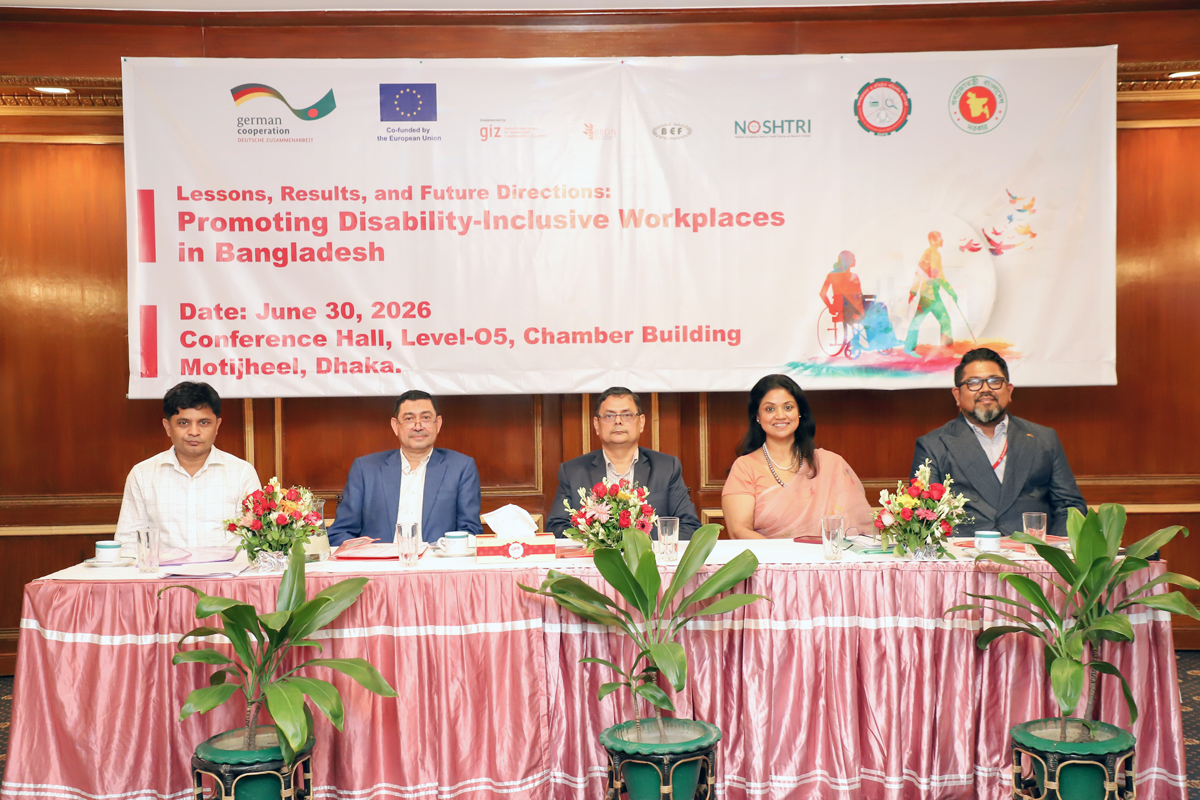
On 30 June 2026, Bangladesh Business & Disability Network (BBDN), in collaboration with Deutsche Gesellschaft für Internationale Zusammenarbeit (GIZ) GmbH under the Social Protection for Workers in the Textile and Leather Sector (SOSI) project, convened policymakers, employers, industry associations, development partners, medical professionals, and technical experts to reflect on the achievements of the SOSI project and discuss the future of disability-inclusive workplaces in Bangladesh. The programme featured three technical sessions focused on strengthening disability-inclusive employment and occupational health systems.
‘Session 1: Decoding the Policy Gaps’ examined key inconsistencies between Bangladesh Labour Act, 2006 and Rights and Protection of Persons with Disabilities Act, 2013, including differences in the definition of disability, limited provisions for reasonable accommodation, rehabilitation, employment retention, and protection against disability-based discrimination. Discussions called for harmonizing the two laws to strengthen inclusive employment and Return-to-Work (RTW) practices.
‘Session 2: Return-to-Work in Action – From Policy to the Factory Floor’ highlighted the progress of the RTW programme, which delivered 9 training batches for 276 HR, welfare, compliance, and medical professionals from 140 factories and organizations across Dhaka, Chattogram, and Rajshahi. A total of 140 factories and organizations from sectors including shipbreaking, steel, pharmaceuticals, hospitality, and manufacturing participated, engaging HR, Welfare, and Compliance professionals across Dhaka, Chattogram, and Rajshahi reflects strong cross-sector commitment to institutionalizing Return to Work (RTW) practices and promoting more inclusive workplace rehabilitation systems nationwide.
‘Session 3: Current Perspectives and Future Career Pathways on Occupational Diseases’ presented the outcomes of 9 Occupational Disease and Occupational Medicine training batches, which built the capacity of 202 medical professionals from 116 factories, alongside representatives from DIFE and NOSHTRI. Discussions emphasized strengthening occupational disease prevention, diagnosis, reporting, and workforce development, while promoting occupational health as a growing career pathway in Bangladesh’s industrial sector.
The event was graced by Md. Forhad Siddique, Inspector General (Additional Secretary), Department of Inspection for Factories and Establishments (DIFE) as the Chief Guest, and Md. Abdul Wadud, Deputy Secretary, Ministry of Labour and Employment (MoLE) and Farooq Ahmed, Secretary General and CEO, Bangladesh Employers’ Federation (BEF) as the Special Guests. They emphasized the importance of safe workplaces, effective Return-to-Work systems, stronger government and industry support, and a workplace culture that prioritizes worker rehabilitation and inclusion.